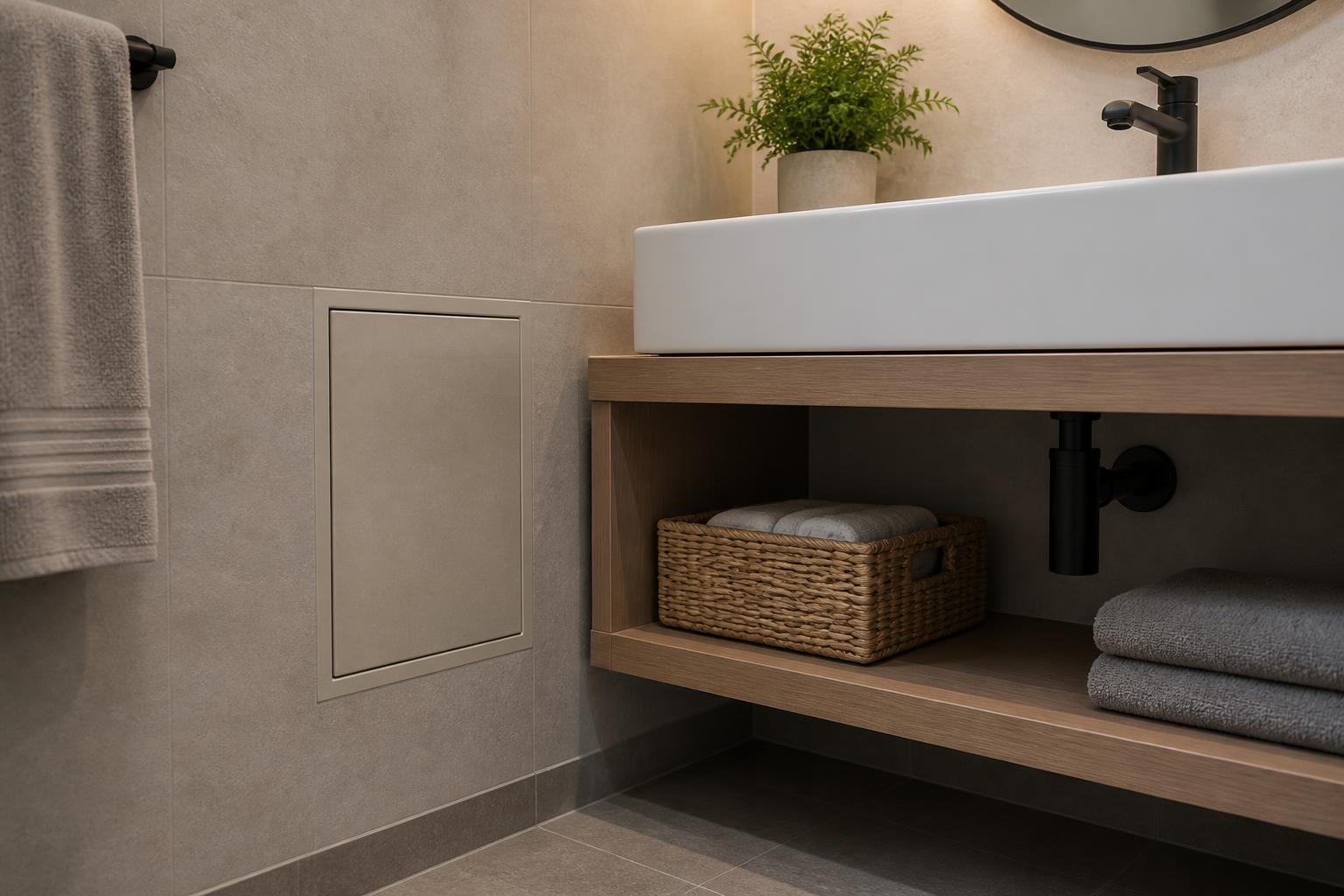
If you hear water running when nothing is on, notice a damp spot that keeps coming back, or see a meter moving without a clear reason, a hidden leak may already be causing damage. The sooner it is traced, the easier it is to limit mess, reduce wasted water, and avoid bigger repairs.
Sirone Plumbing Services helps property owners across Reston, VA locate the source of leaks with a careful, methodical approach. We look for the signs behind the symptom, then explain what the findings mean so you can decide on the next step with confidence.
Not every leak shows up as a puddle. Many begin behind a wall, under a slab, around a fixture, or beneath a sink where the first clues are subtle. A homeowner often notices the effect before the source.
If one of these signs keeps returning, it is worth having the linework checked rather than guessing at the cause.
Leak detection is rarely about finding a single obvious drip. Water can travel along framing, pipe runs, and finishes before it becomes visible. That means the wet spot you see may be far from the actual failure.
Leaks behind walls can show up as discoloration, peeling paint, or a faint odor before any water appears on the surface. These are common around supply lines, fixtures, and areas where fittings sit inside enclosed spaces.
When a pipe leaks below a floor, the signs may include a warm or damp area, cracked grout, or a spot that never seems to dry. A careful inspection helps narrow down whether the source is above or below the surface.
Some of the most frustrating leaks start at faucets, toilets, valves, hoses, or disposal connections. These can be easy to miss because the drip may be slow, intermittent, or hidden inside a cabinet.
At Sirone Plumbing Services, leak detection starts with listening to what you have noticed and checking the most likely sources first. We work through the property methodically so the diagnosis is based on evidence, not guesswork.
This process helps remove uncertainty. You get a clearer picture of whether the issue is minor, recurring, or tied to a larger plumbing concern.
Many calls for leak detection end up tracing back to a familiar set of trouble spots. Knowing where leaks often begin can help you spot patterns early.
Some of these problems are visible right away. Others require tracing surrounding surfaces and nearby piping before the source becomes clear.
Homes and businesses across Reston, VA can face different leak scenarios depending on the fixture, layout, and how the plumbing is used day to day. A small drip at one property may create only a stain, while a hidden leak at another may affect cabinets, flooring, or wall finishes.
Sirone Plumbing Services works with residential and commercial properties throughout Reston and surrounding Northern Virginia communities. We also serve nearby areas such as Alexandria, Manassas, Fairfax, Gainesville, Bristow, and Centreville. The goal is to find the source cleanly, explain the findings clearly, and help you move toward the right repair.
When a leak seems hard to pin down, a careful inspection is often the difference between a quick fix and repeated water damage.
If you suspect a leak, a few simple steps can help protect the property before service begins.
If the same area keeps showing moisture after cleanup, the source may still be active behind the surface or along a nearby line.
Small leaks can create larger problems when they are left alone. Water can soak into framing, drywall, flooring, and cabinets long before the source becomes visible. The longer the leak continues, the more surfaces may be affected.
There is also the practical side. A hidden leak can waste water and make it harder to know whether a repair has actually solved the issue. Clear leak detection gives you a starting point, so repairs can target the actual problem rather than a guess.
Intermittent leaks are common. A connection may drip only when pressure changes or when a fixture is used, which is why timing and location notes are helpful during inspection.
Yes. Moisture can stay behind walls, beneath floors, or inside cabinets before it becomes obvious. A smell, stain, or warped surface may be the first sign.
Waiting often makes the source harder to trace. If you see a pattern of staining, sound, or moisture that keeps returning, it is worth having it checked sooner.
They can. A toilet may leak at the base, tank, or supply connection, and some of those problems do not create a dramatic puddle right away.
We often look at faucets, valves, hose bibs, toilets, garbage disposals, sump pumps, and water heater connections when tracing a leak.
Signs such as staining, bubbling paint, a musty odor, or moisture that seems to spread from one area often point to a concealed source that needs closer inspection.
If you need leak detection service at a home or business in Reston, VA, Sirone Plumbing Services can help trace the source and explain the next step. Call +17036889000 to request service or arrange a free consultation to review your options. Our office is located at 11870 Sunrise Valley Dr # 200, Reston, VA 20191, USA.
When a leak is hard to see, a careful approach matters. We focus on the signs, follow the trail, and help you move from uncertainty to a clear plan.
Start Here
Tell us what is happening at your property, and we will help you understand the right next step for repair, replacement, or inspection.